
Award season is one of the most fascinating times of year for film lovers. The competitive nature can turn art into something more akin to sport.
This sentiment has perhaps never been more evident; a season defined not by one dominating narrative, but by women repeatedly seizing the spotlight. From impassioned acceptance speeches to commanding, career-defining performances, this awards circuit has been refreshing if not a little predictable (but we’ll get to that).
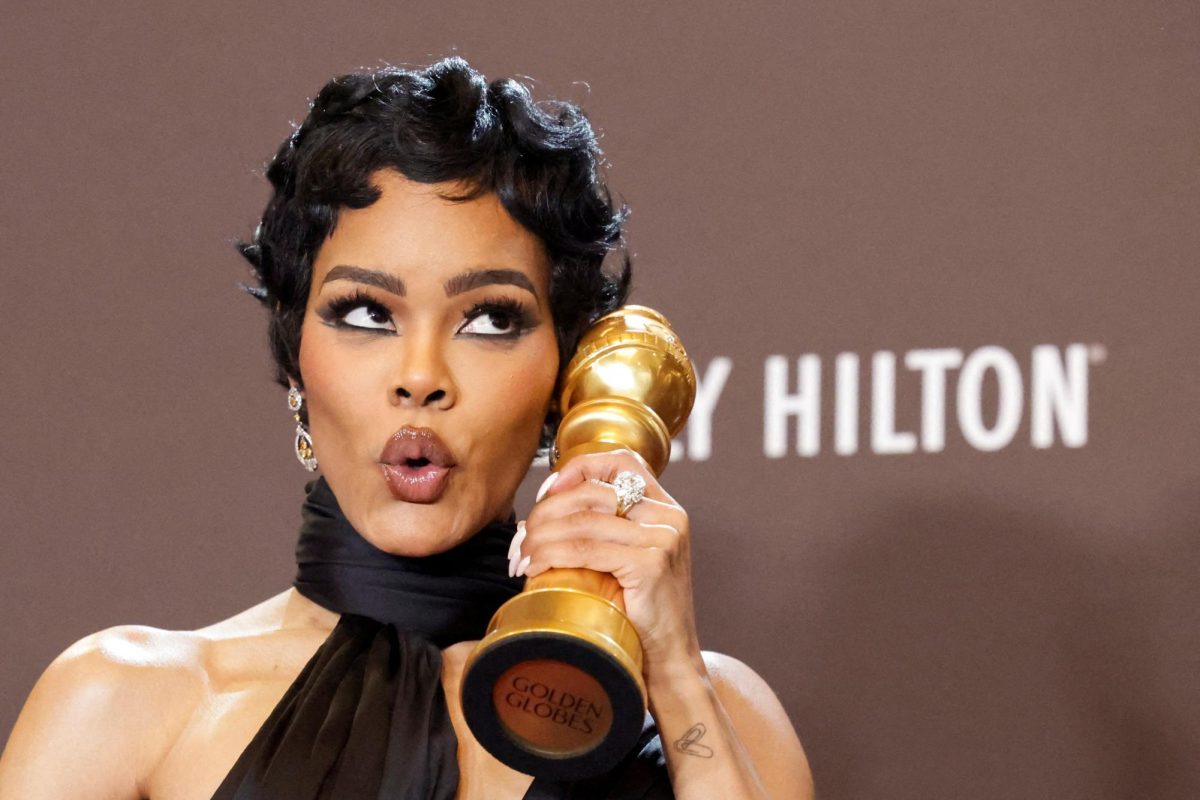
No moment captured that shift better than Rose Byrne’s sweep at the Golden Globes for her painfully realistic embodiment of the worst part of all of us in If I Had Legs, I’d Kick You (2025). Her win was proof that restraint, rage, and humor could combine to create something truly extraordinary.
This year’s Best Actress race reflects that energy. It is crowded, competitive, and especially rich, featuring international breakthroughs and bold collaborations with auteur directors.
With that being said, let’s look at my predictions for this year’s Best Actress, ranking the Academy Award hopefuls from least to most likely to take home the prize.
Renate Reinsve’s inclusion in this category feels both inevitable and radical; Reinsve’s performance in the Norwegian film marks the only foreign language actress I believe will receive the awards nod.
Following her breakthrough in The Worst Person in the World, Reinsve has steadily built a reputation for performances that feel lived-in rather than performed. In Sentimental Value (2025), she delivers her most restrained and emotionally layered work to date.
The film itself is modest in scale, relying less on plot than its direction, performances, and atmosphere. Reinsve anchors the entire project, portraying a woman grappling with memory, inheritance, and the cost of intimacy.
Her strength lies in her refusal to overplay emotion. Instead, she allows meaning to surface organically, trusting the audience to meet her halfway. Reinsve embodies the classic principle of show don’t tell to its full effect, creating a visceral reaction for viewers in a performance that lingers long after the film ends.
Despite critical acclaim and passionate support, Reinsve’s understated approach may ultimately work against her in a category filled with louder, more visible demonstrations of emotion.
A nomination is richly deserved. A win, however, feels just out of reach.
One of many actresses whose victory wouldn’t surprise me would be Emma Stone.
Stone’s collaboration with Yorgos Lanthimos has become one of the defining actor-director partnerships of the last decade, and Bugonia (2025) may be their strangest, and most strange effort yet (which is saying a lot, especially considering Poor Things (2024), which Stone won the Oscar for).
Reuniting with Lanthimos after Poor Things, Stone plays Michelle Fuller, a powerful corporate executive whose outward composure masks something far more unsettling (so unsettling that the male antagonist of the film believes her to be an alien sent to destroy Earth). The performance is precise, stylized, and deliberately opaque, creating a performance that felt, to me at least, foreign to what I’ve come to expect from Stone; while this is hardly a criticism, it did take some getting used to, especially in the beginning of the film.
What makes Stone’s work in Bugonia so impressive is her willingness to weaponize stillness. Where the film’s men spiral into paranoia, Stone remains inscrutable, forcing audiences to make sense of her strange silence; the idea that she may be an alien feels like a very real possibility.
It’s a performance that rewards close attention and repeat viewings, and one that further solidifies Stone as one of the most adventurous stars working today. Ultimately however, in a year where raw emotion has clearly taken center stage, Stone’s performance that may be described best as “stone cold” is certainly an outlier.
While Stone is my favorite actress working today, her performance cannot quite be put at the top.

After decades of quietly impeccable work, Rose Byrne has finally found herself at the center of the awards conversation.
Best known for her versatility, equally convincing in broad comedy, prestige drama, and everything in between, Byrne has long been one of the industry’s most reliable performers. What she has rarely been afforded, however, is the opportunity to dominate a film on her own terms.
That changed with If I Had Legs I’d Kick You (2025), a film that lives and dies by Byrne’s performance. The role demands emotional precision, comedic timing, and a willingness to expose its protagonist’s ugliest impulses (a trope often reserved for male protagonists); to the audience’s pleasure, Byrne delivers all three with devastating control.
Her character is abrasive, self-aware, and often difficult to like; there are certainly similarities to Byrne and Chalamet in Marty Supreme (2025), but if you want my take on that performance you’ll need to check out the other articles in this series. Byrne refuses to sand down any rough edges, instead embracing them.
Her Golden Globe wins cemented her as a serious contender and marked one of the clearest moments this season where women’s performances took undeniable precedence. Still, despite the accolades, it’s hard to imagine the Academy awarding her over performances that feel more culturally seismic.
Perhaps the most entertaining performance of the year, a nomination is well deserved, a win may be just out of reach.

Normally, this line would be a reflection of how tight the race has been; how anyone could have won. However, this is not any year, and if you’ve been keeping up with awards season, you’d know why.
Jessie Buckley’s work in Hamnet (2025) is not just the best performance of her career, but the emotional backbone of the entire awards season. I don’t know the last time an actress made me feel such agonizing pain, and if you had made me guess which performance I’d attribute this to before having watched a single film this year, I’d be adamant that the historical fiction about Shakespeare and his wife would not be the film to produce such an emotional response. I would be very, very wrong.
Buckley portrays Agnes Shakespeare not as a historical abstraction, but as a woman defined by grief, intuition, and ferocity. Her performance is raw without being indulgent, poetic without slipping into affectation.
What makes Buckley’s work extraordinary is her command of contradiction. She is both restrained and explosive. In moments of silence, Buckley communicates volumes; in moments of anguish, she never loses control.
Unlike more traditionally “showy” performances, Buckley’s doesn’t announce itself. She accumulates power slowly, until it becomes overwhelming. Unlike, Reinsve’s aforementioned performance, this quality is unlikely to be weaponized against her as it pertains to awards due to the raw power of the film’s conclusion, carried by Buckley to become one of the most memorable moments in film this year.
Much like this awards season itself, her performance centers women not as symbols, but as full, complicated individuals. It is deeply human.
For these reasons, Jessie Buckley is my prediction.
Who do you think will win the award? Be sure to check out my other articles to see my predictions for the remaining major categories, and come back after the winners are announced to see how well these picks held up.






Bri • Feb 11, 2026 at 10:02 am
Loved the oscar’s this year!
kaylen • Feb 11, 2026 at 9:58 am
Nice article.
shannon • Jan 27, 2026 at 7:23 pm
Emma stone will be taking this oscar home for sure !