
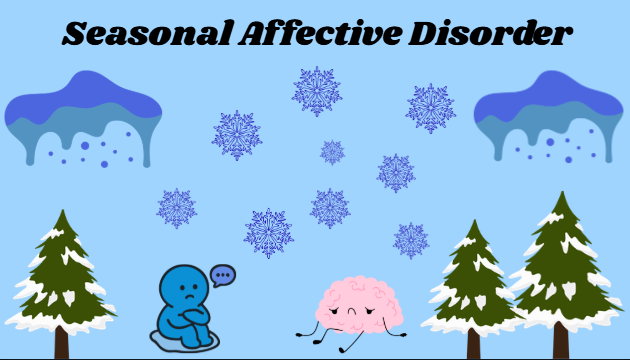
Living in a place with a winter season can be increasingly difficult as you get older.
When you’re young, winter doesn’t affect you very much. Sure, you can’t play outside for long periods of time anymore, and you may occasionally get the joy of snowfall, but other than that, winter is unremarkable to a kid.
However, it’s not unusual for people as young as teenagers to recognize seasonal depression, or Seasonal Affective Disorder (SAD), within themselves. The days get shorter once we set the clocks back, we’re stuck inside hiding from cold weather and harsh winds, and we spend less time under the sun getting Vitamin D, which is a lot more crucial than people think.
Seasonal Affective Disorder is a type of depression that’s related to changes in season. Most people are affected by SAD starting in the fall and continuing through winter until spring and summer, but others are affected by the opposite pattern.
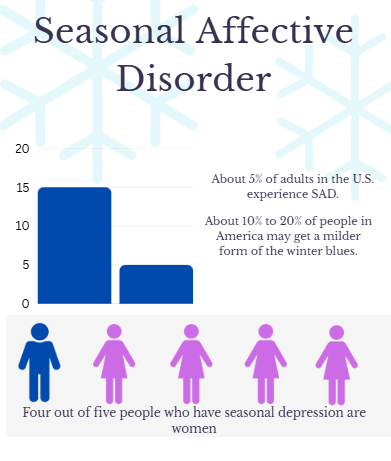
The American Academy of Family Physicians reports that 4 to 6 percent of people in the United States suffer from winter-onset SAD, while 10 to 20 percent may suffer from a milder form of the disorder. The risk of getting SAD for the first time decreases as a person ages, meaning teen SAD is more common than it is in adults.
Symptoms for winter-onset SAD, sometimes called winter depression, may include oversleeping, appetite changes (especially craving foods high in carbohydrates), weight fluctuations, changes in mood, and low energy.
The specific cause of SAD remains unknown, but some factors that may come into play include:
Your biological clock (circadian rhythm)- This decrease in sunlight may disrupt your body’s internal clock and lead to feelings of depression.
Serotonin levels- A drop in serotonin, a brain chemical (neurotransmitter) that affects mood, might play a role in SAD. Reduced sunlight can cause a drop in serotonin that may trigger depression.
Melatonin levels- The change in season can disrupt the balance of the body’s level of melatonin, which plays a role in sleep patterns and mood.
We asked members of our school about their experience with winter depression and how it affects them. “Yes, I am more tired and more anxious,” said teacher Mrs. Hasset, and I get more sick as opposed to summer.”
A sophomore, Haily, added, “Yes, I’m more tired now and don’t wanna be anywhere but in my house. Due to the cold weather, I feel like it makes it harder to be super energized or excited to go out since no one wants to be in the cold, and since it gets darker faster, it makes me tired quicker.”
It’s easy to feel a bit dejected when you consider that New York gets six months combined of fall and winter weather, but it’s important to try and not let SAD consume you. Treatments for SAD include light therapy (phototherapy), psychotherapy, and medications. It can also help to get outdoor exercise, spend time with friends and family, and improve diets and sleep schedules.
Not all hope is lost though; we still get six months combined of spring and summer to recharge and soak up as much sunlight as possible; we just have to get through the cold months first.







catrina • Dec 22, 2025 at 12:16 pm
I think this is very informational as well as educational for some that may not know anything about seasonal affective disorder.
Mia Tesoriero • Dec 22, 2025 at 12:13 pm
From this piece I learned the main causes of Seasonal Affective Disorder, and treatments that can prevent it from taking over a students life during the fall and winter.