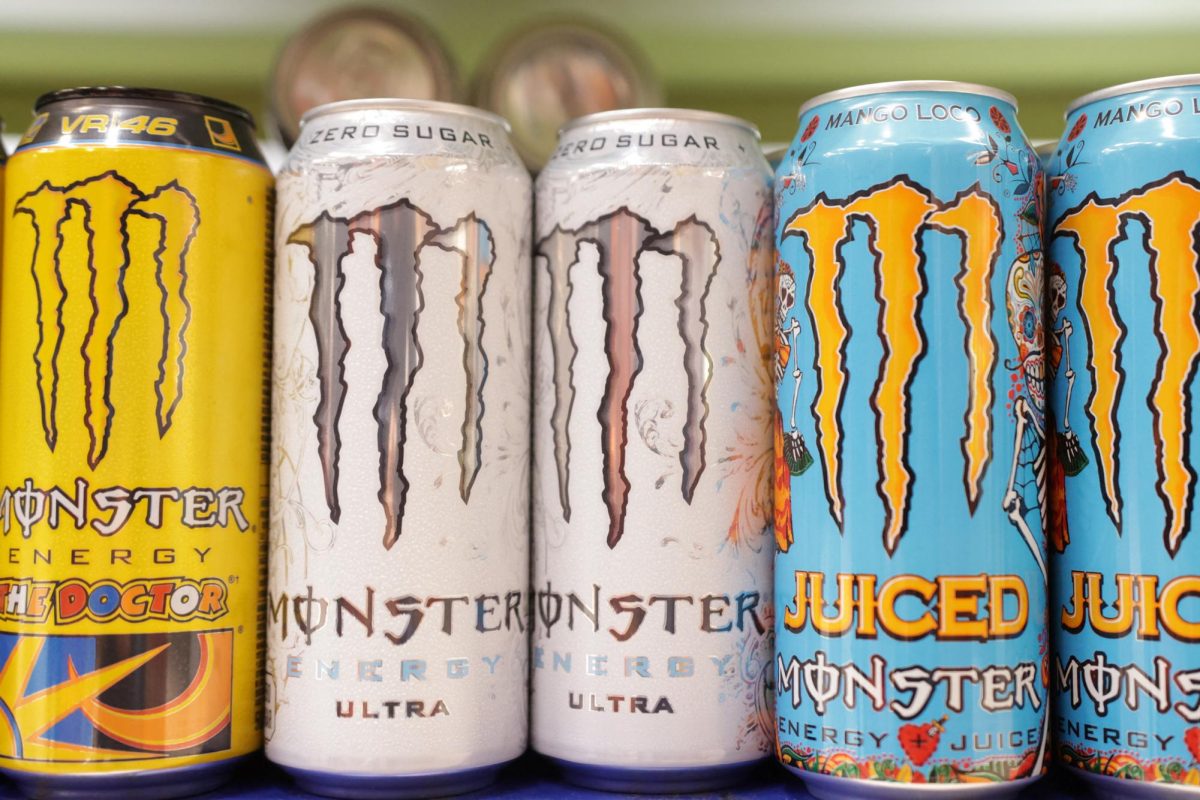
Energy drinks have taken adolescents by storm with thousands of students across the country adding beverages such as Celsius and Alani to their daily diets. In the midst of long school days, sports, extracurriculars and late-night studying, these drinks are seen as an easy fix for a boost of energy. As academic pressures and busy schedules continue to grow as finals approach, many students turn to these beverages as a convenient solution.
The appeal of these drinks can be attributed to their wide variety of flavors, easy accessibility, and presence on social media, making them common in school hallways and classrooms. While these drinks are marketed for their ability to enhance one’s focus, alertness, and increase metabolism, it’s important to understand the health risks that present as a result of daily consumption.
The Surge
The rise of energy drinks didn’t simply happen overnight, rather they have become increasingly accessible and sensationalized over social media. Beginning in the mid 1980s,
Red Bull launched their first product in Austria, where today, it has grown to dominate the markets globally. In 2025 approximately 13.969 billion cans were sold across 178 countries, ultimately reflecting the brand’s massive influence. As demands increased, it paved the way for more companies like Celsius, Alani, Monster, and Ghost to enter the market, which today are promoted to young audiences through social media.
When asked what influenced students to drink energy drinks, senior Olivia Murphy said, “I started drinking them in my freshman year because I didn’t like coffee yet, I love to drink a Celsius a few days a week now. I feel more awake and happier when I have my energy drink in the morning before school.”
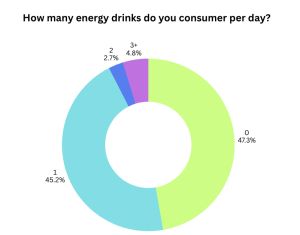
Many students like Murphy relate to this sentiment. In a recent survey of 146 students, it was found that 52.7% of students drink at least one energy drink a day.
With energy drinks being added to people’s daily diets, it’s important to understand what these drinks contain.
Drink Contents
A typical energy drink can have up to 200 milligrams of caffeine in it, with Celsius and Alani being the leaders in caffeine content. Monster Energy has about 160 milligrams, and Red Bull has 80 milligrams.
It is easy to see the appeal of Celsius and Alani among high school students, as they contain 0 grams of sugar and several B vitamins that assist in metabolism and energy production. In comparison, brands like Monster and Red Bull both have over 25 grams of sugar in their standard retail sizes.
Health Concerns
Caffeine is known to improve reaction time, concentration, and lessen the effects of sleep deprivation. Adults can consume up to 400 milligrams of caffeine a day while energy drinks generally contain about 100 milligrams of caffeine. In moderation, energy drinks may not be as terrible as they seem.
However, there currently aren’t any guidelines for how many milligrams of caffeine children are permitted to consume daily. Too much caffeine in the diet can lead to nervousness, insomnia, irritability, and heart problems.
A high schooler from Texas recently passed away from an enlarged heart condition caused by consuming copious amounts of caffeine – the source of this caffeine? Drinking an Alani every day.
Sophomore Kieran Cowell provided some insight on the health concerns of these popular beverages.
“Personally, I am not a big fan of energy drinks because they tend to make me feel nauseous to the point of I’d rather not drink them,” he said.
“I think it’s important that our bodies don’t get used to relying on energy drinks every day.”
Crash and Burn?
While energy drinks may have become a normalized aspect of teen culture, being aware of the contents and health concerns of whatever you ingest will only benefit you in the long run. High school can be stressful, but it’s important to manage your time, get enough sleep, and therefore avoid becoming dependent on energy drinks or any other form of caffeination. Energy drinks may seem like a quick fix to your awareness throughout the day but can be harmful if not controlled. As the school year winds down, students should think twice before reaching for a can of their favorite energy drink and remember that real energy comes from building healthy habits.